I've been trying to feel out what focus I would like to use for my final project. Because I did a post earlier on archetypal criticism I decided to take another look into archetypal criticism, I read an article called, “Bewitching The Shrew,” by Robert M. Schuler. He writes that the view of women as witches is a myth that is found in many of Shakespeare’s plays. One of his earlier plays that shows this archetype is “The Taming of the Shrew”. Schuler writes that this play, “exploits these linkages by representing Katherina through the Elizabethan cultural practices, the popular literary and dramatic types, and the political and theological discourses that identified scolds or shrews with witches” (387). In Shakespeare’s time witches became equated with ‘unruly housewives’ or unruly women, thus Kate becomes considered ‘demonic.’
Showing posts with label LO 2:a. Show all posts
Thursday, February 24, 2011
Archetype: Witch - Bewitching the shrew
Saturday, February 19, 2011
Dynamics
In one of my earlier posts I was examining an interesting switch of gender traits in Antony and Cleopatra. Antony, who should be a very masculine, strong hero actually seems more dependent and emotional than Cleopatra. In the play Cleopatra constantly tries to excuse herself for her 'womanly' flaws, but she acts more rationally and logiacally than Antony most of the time.
Lindsay commented on the blog and suggested I do a follow up looking at this more closely. We also talked about the different roles women play in Shakespeare's plays in class the other day. I think it was Cara who was saying how woman's characters were strong and dynamic when Queen Elizabeth was the monarch, but then changed drastically (into weaker, suicidal characters) once King James took the throne.
Wednesday, February 9, 2011
foil
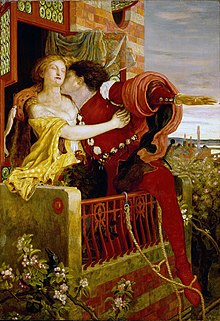
As I've been reading Antony and Cleopatra this week it kept reminding me of Romeo and Juliet. The way Antony and Cleopatra end up killing themselves to be with the one they love is amazingly similar to Romeo and Juliet's plite. The two main topics I want to discuss are loyalty to one another and faith in one another.
I wanted to look at some similarities and differences between the two plays. For starters age and location. Romeo is 14 and Juliet is 13, very, very young. Antony refers to his age several times as older, and Cleopatra is more mature as well. Despite these drastic differences in age and time periods though, both couples (especially the men) act irrationally about their love.
It always comes up very first in any discussions I have with my roommate, how young Romeo is, and how fickle. He is in love with one girl on moment, and the next with Juliet. He reminds me of Cleopatra, she has had lots of lovers too, but she and Romeo both seem loyal to Antony and Juliet respectively during the plays.
These are both major tragic romances. These couples have something special between themselves, and yet . . . they act so strangely with each other. In some ways I think Romeo and Juliet are more rational (and excusable) than Antony and Cleopatra. Romeo loves Juliet - they get married. Antony love Cleopatra - he marries Caesar's sister. - What the heck? If he loves Cleopatra, he should marry her. Doesn't he know his own heart well enough to be true to it?
Antony ultimately causes the downfall of his empire because he isn't strong enough to stick with the fight. He could be such a strong character, but he lacks the will to go on. He runs away from his own battle when Cleopatra leaves, and then blames his losses on her. Instead of trying to work things out he banishes her from his presence, threatening to kill her. - Then, when Cleopatra sends word she has died of grief, he tries to commit suicide - even though he was planing on killing her himself.
On the other hand, Romeo makes a major problem when he kills Juliet's cousin. He's young and hot tempered, but still. - He just got married, what's the best way to show his love? - he'll kill her cousin.
Both of these romances end because of mis-communication and, ultimately, haste. Romeo runs of to meet Juliet and then kills himself minutes before she wakes up - ahh! Antony falls on his sword, mortally wounding himself - once again, minutes before Cleopatra's servant arrives to inform him she really isn't dead.
Left on their own, the only thing that seems to be left for Cleopatra or Juliet to do is to kill themselves in order to reunite themselves with their lovers. Cleopatra does it for Antony, but also for dignity - she is a conquered queen. Juliet seems to kill herself purely out of love for Romeo. No matter what people say - Romeo and Juliet really had something together, no matter how illogical.
Thoughts?
Every time I read these plays it drives me crazy! Antony and Cleopatra, by the time they die, it almost seems fitting. Antony has lost his standing in life, as has Cleopatra, and the only 'honorable' thing left to do seems to be death. Romeo and Juliet on the other hand - are so much more tragic to me. They are SOOOO close! Minutes away - but then again. Minutes away from what? They're so young, and their families hate each other so vehemently. . .
Maybe the plays end in the best way they could. Perhaps letting these lovers die, and live together in history forever is more charitable on Shakespeare's part than letting them live on. It's like a picture, frozen the way it is. They will always love each other - no late night fights, no breaking up, no more battles, or tears. They are saved forever, together.
I wanted to look at some similarities and differences between the two plays. For starters age and location. Romeo is 14 and Juliet is 13, very, very young. Antony refers to his age several times as older, and Cleopatra is more mature as well. Despite these drastic differences in age and time periods though, both couples (especially the men) act irrationally about their love.
It always comes up very first in any discussions I have with my roommate, how young Romeo is, and how fickle. He is in love with one girl on moment, and the next with Juliet. He reminds me of Cleopatra, she has had lots of lovers too, but she and Romeo both seem loyal to Antony and Juliet respectively during the plays.
These are both major tragic romances. These couples have something special between themselves, and yet . . . they act so strangely with each other. In some ways I think Romeo and Juliet are more rational (and excusable) than Antony and Cleopatra. Romeo loves Juliet - they get married. Antony love Cleopatra - he marries Caesar's sister. - What the heck? If he loves Cleopatra, he should marry her. Doesn't he know his own heart well enough to be true to it?
On the other hand, Romeo makes a major problem when he kills Juliet's cousin. He's young and hot tempered, but still. - He just got married, what's the best way to show his love? - he'll kill her cousin.
Left on their own, the only thing that seems to be left for Cleopatra or Juliet to do is to kill themselves in order to reunite themselves with their lovers. Cleopatra does it for Antony, but also for dignity - she is a conquered queen. Juliet seems to kill herself purely out of love for Romeo. No matter what people say - Romeo and Juliet really had something together, no matter how illogical.
Thoughts?
Every time I read these plays it drives me crazy! Antony and Cleopatra, by the time they die, it almost seems fitting. Antony has lost his standing in life, as has Cleopatra, and the only 'honorable' thing left to do seems to be death. Romeo and Juliet on the other hand - are so much more tragic to me. They are SOOOO close! Minutes away - but then again. Minutes away from what? They're so young, and their families hate each other so vehemently. . .
Maybe the plays end in the best way they could. Perhaps letting these lovers die, and live together in history forever is more charitable on Shakespeare's part than letting them live on. It's like a picture, frozen the way it is. They will always love each other - no late night fights, no breaking up, no more battles, or tears. They are saved forever, together.
Wednesday, February 2, 2011
Death thou shalt die
As Isabella states, "The sense of death is most in apprehension, and the poor beetle that we tread upon in corporal sufferance finds a pang as great as when a giant dies." In a kind of gross, but very dramatic way Isabella is talking about how precious life is. The focus is on sin and punishment, the action and then the consequence. However, instead of constructing the play around justice and mercy, Shakespeare explores the idea of true verses false.
The executioner of justice himself becomes polluted by the sin he is trying to get rid of. How does this change the story? There is something that is morally wrong about a person who will execute someone for a sin they themselves will commit.
So then, what are we supposed to learn from it? I think a lot of it is simply human life. Shakespeare is famous for his saying, "Some rise by sin, and some by virtue fall" because it states to eloquently the truth. Life is not 'just.'
"The greatest minds are capable of the greatest vices as well as of the greatest virtues."
- Rene Descartes
It then comes down to what we do with what we have, rather than just what we have. Shakespeare writes about people who have great opportunities given them, like William III, Henry V (Hal), Macbeth, etc. and then about what they do with it. Some people fail, some rise and succeed. Shakespeare also discusses the responsibility those who have power hold.
"Those with great power, have great responsibility."
- Spider Man's Uncle.
Being a hero is less about where we stand in life, than what we do.
Subscribe to:
Posts (Atom)