Pages

Monday, February 7, 2011

Classes

Because I wasn't sure where everyone in Shakespeare's plays fit I did some research about the class system.  There are 4 main classes in the Shakespearean era.  These are: Royalty,
Aristocracy, Middle Class, and lower class. There are also peasants, but they don't seem to be considered either a separate class from other lower class members, or a class at all.
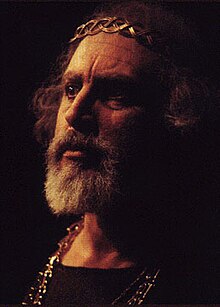
Royalty in Shakespeare's plays would be characters with King in their title (like Henry IV, Henry V, William III, King Duncan, or King Lear).  Royalty also includes princes (Hamlet, Hal), dukes, marquesses, earls, viscounts, and barons.
 Royalty play a large roll in Shakespeare's plays.  Not only important on stage, the current monarchs of the time period also affected Shakespeare's plays (specifically his political stands.)  - For Instance, when King James IV was on the throne Shakespeare completely switched the roles of Macbeth and Banquo because King James' lines came from Banquo.  In history Banquo was the villain and Macbeth was the good guy. 
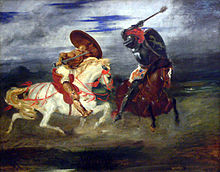


Aristocracy would include the nobility such as knights (like sir Andrew Aguecheek and sir Toby Belch in 12th night), squires, and gentlemen (Petrucio).  These are people who don't depend on manual labor to survive, usually owning land and so don't have to work with their hands. 
There are also many gentlemen and soldiers who are not named in Shakespeare's plays, he usually just calls them 'two gentlemen,' or 'soldier.'
These may practice law, medicine, or liberal sciences, or be captains in war, or serve the government in some other noteworthy way, and is able to afford looking the part.


Middle class are normally well off, they do work, but they have nice houses and make money traveling.  Mostly farmers on gentleman's lands, merchants, or artisans.  Obviously characters like the merchant of Venice would fit into this category.  There is also a merchant in Comedy of Errors named Balthasar as well as Egeon and Antipholus of Ephesus himself.


Lower class pretty much includes everyone else.  Peasants, townsmen, fools and clowns (Launcelot Gobbo.)  The fools and clowns play a very interesting role in Shakespeare's plays, acting the part of unintelligent entertainers, but usually saying the wittiest things in the entire play.  Also, players such as the gravediggers (Hamlet), Dogberry and Catsberry (Much ado about Nothing), Christopher Sly (Taming of the Shrew), and all servants would be included in this class.

There are also the fantastical characters in Shakespeare's plays such as the fairies in A Midsummer Night's Dream, or the witches in Macbeth.

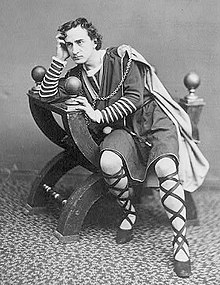
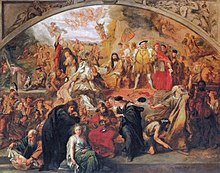


Friday, February 4, 2011

right, right?

Today in class we were discussing characters in Shakespeare's plays.  We talked about his 3-D characters and then his 2-D characters.  I looked up an article about Shakespeare and moral agents.  Robert B. Pierce has an article entitled, "Being a Moral Agent in Shakespeare's Vienna," which examines multiple Shakespearean plays and their 3-D characters. 

Pierce writes that there are many, many different characters in Shakespeare's plays.  There are the fluffy, nothing characters that don't have any deep thoughts and are always doing stupid things.  But then there are the really deep, dimensional characters. As Pierce writes, "Shakespeare seems to have devoted considerable attention to portraying how ideas impinge on the human experience, and especially to studying moral idealists" (267).

Shakespeare's later plays are "unusually idea centered for him and are especially concerned with characters who try to apply moral ideas in the world" (268).  Using many examples Pierce looks at different characters.  I know all of us haven't read Julius Caesar, but he begins by examining Brutus - a character that wants to create right in the world, but is conflicted as to how he can do so.  We have read Hamlet, which is his next subject.  Hamlet has the same moral problem of wanting to do what is right, but not knowing how to act.

Wednesday, February 2, 2011

Death thou shalt die

In Measure for Measure the whole plot centers around death.  Death as penance for something that is wrong, death as feared, death as accepted . . . etc.  Everything being said really made me think.

As Isabella states, "The sense of death is most in apprehension, and the poor beetle that we tread upon in corporal sufferance finds a pang as great as when a giant dies."  In a kind of gross, but very dramatic way Isabella is talking about how precious life is.  The focus is on sin and punishment, the action and then the consequence.  However, instead of constructing the play around justice and mercy, Shakespeare explores the idea of true verses false.


The executioner of justice himself becomes polluted by the sin he is trying to get rid of.  How does this change the story?  There is something that is morally wrong about a person who will execute someone for a sin they themselves will commit.

So then, what are we supposed to learn from it?  I think a lot of it is simply human life.  Shakespeare is famous for his saying, "Some rise by sin, and some by virtue fall" because it states to eloquently the truth.  Life is not 'just.'

"The greatest minds are capable of the greatest vices as well as of the greatest virtues."
  - Rene Descartes


It then comes down to what we do with what we have, rather than just what we have.  Shakespeare writes about people who have great opportunities given them, like William III, Henry V (Hal), Macbeth, etc. and then about what they do with it.  Some people fail, some rise and succeed.  Shakespeare also discusses the responsibility those who have power hold.


"Those with great power, have great responsibility."
  - Spider Man's Uncle.

Being a hero is less about where we stand in life, than what we do.

Saturday, January 29, 2011

The Globe Theater!

The globe theater.  That's where Shakespeare put on his plays.  It has a kind of interesting history, originally Shakespeare rented the land that the theater was built on, when he wanted to buy it the land owner said no (he was making a lot of money off of it.)  Shakespeare shrugged and moved the theater - literally relocated it.

People going to see plays during Shakespeare's era were a lot more involved in the showing than a lot of Shakespeare 'fans' are now when they just read it.  The globe theater jutted out into the stage so that the actors were constantly interacting with their adience.  As well as simply being surrounded on all sides on the stage, actors also walked through the crowd, acting out parts of the play in the pit amongst the viewers.


I went to a viewing of Hamlet at the Shakespeare Festival last summer and thought it was fascinating.  Actors actually ran up and down the isles between chairs, one even came down and sat one someone's lap!

Here's a documentary I found about the globe theater.  It's kind of long but has some really great information in it . . .


There's a lot of great ways to enjoy and learn from Shakespeare, but the theater is really fun.  What's really great about Shakespeare is that he still is performed (over, and over, and over again.)  It gives you a completely different feel for the plays when you see them performed like they were intended - its fun.

Monday, January 24, 2011

We have found ourselves a Hero

What constitutes a hero?

In one of my other English classes we've been reading about Carl Jung.  He has thought on the subject of heroes very deeply and has written many articles about it.  Jung argues that every human being has a 'shadow.'  This shadow is a part of the person, a dangerous piece.  It is the creativity and spontinaity, but it is also prideful and powerful.  Jung discusses how each person runs the risk of being 'eaten' or destroyed by their shadow if the shadow is completely ignored.

There is a balance in all things.  Reason and intuition, good and bad, light and dark.  The problem is in finding equilibrium.  Reading Richard III, this play deals with issues of morality and ethics.  So too does every story or play that deals with life.

What does this shadow mean?  Are there some wrong things that aren't really evil?  Lines so often times seem blurred and unclear. Right is always right.  But the question is posed: what of it?  They killed the dragon, they saved the fair maiden, they defeated the army, they overcame their fears . . . But, as Hamlet states at the graveyard, in the end all men die.  Once they are gone and buried they are all equal, good or bad, rich or poor - the worms certainly don't discriminate (sorry that's gross.) 

I suppose its in the times of our trials and struggles that we truly learn who we are.  Hamlet found he didn't know who he was, he was scared of himself.  Richard is ambition and jealousy, willing to stoop to anything and everything to become king.  Lear can't live with what he's done to his daughter and goes crazy.  Macbeth looses all sight of who he is and becomes his shadow. 

What should we learn from all of this?  Probably to be prepared before we're faced with problems and struggles. 

As Shakespeare penned in The Tragedy of Richard III:

"When clouds appear, wise men put on their cloaks;
When great leaves fall, the winter is at hand;
When the sun sets, who doth not look for night?
Untimely storms make men expect a dearth."  - Third Citizen

Thursday, January 20, 2011

What is he getting at?

This is so perfect, I just had to put it on


Worth the time, right?
This clip really made me think about Hamlet though.  What is Shakespeare trying to tell/teach us.  - although sometimes I wonder if he was just depressed one day and decided to write a play where everyone dies.  I figure there must be something deeper about what he's writing than just letting everone die for the heck of it.
The play has lots of great themes: life and death, 'to be or not to be.'  It's also about sanity and mind over matter. 

Who's the real hero here?  And what is it that the hero does that makes them heroic?  In this story they all die, so the true measure of heroism is not simply in 'being the last to survive.'  It makes me want to start examining Hamlet closer, what qualities does he have that could make him a hero?  He doesn't seem particularly brave, and he does go crazy, or at least pretends to. 

Maybe Hamlet isn't the hero.  I don't think the king is the hero, he doesn't get the prize.  But perhaps someone like Polonius who at least realizes what the trouble is could be considered more heroic.  Even if he isn't 'true to himself' he at least sees that its a short coming.  - then again, if you know what the problem is and then don't act on it that may be worse then simply remaining ignorant.


Thoughts?

Tuesday, January 18, 2011

Once More Goals

Adding on to the goals I posted previously, 'fleshing them out' you might say: I read probably twenty different plays by Shakespeare in high school - which gave me breadth, but not really depth.  I also took a Shakespeare class from UVU before I transferred which examined about four plays in depth.  After all this studying and learning and readcing, I still don't seem to have even scratched the surface.

To make my goals brief I could just say I want to be able to : read, understand, analyze, participate in, and use Shakespeare in the world of today.  there's got to be a reason the guy is still famous and being read.  He's not quite as old as Socrates and Plato, but he's probably quoted more!

As well as just sitting down with a 'good play' it's important to actively engage it.  I want to watch movies, watch plays, read criticism, talk with my peers, etc. about Shakespeare. 

One day I got so involved in Hamlet that when my roommate came back from school I started talking Shakespearean to her - she gave me a 'you poor thing' grin and said, "I think you've been reading too much Hamlet."

However . . . Shakespeare is interesting and what he writes is still applicable in our day (alright, so we're not all princes and princesses whose father has just been murdered, but there are other things.)  There's something about the questions Shakespeare poses that lets us, or even asks us, to answer them.  I think that's the power of Shakespeare - he talks to us, each of us, (if we can understand what he's saying and in what language he's saying it), in a powerful, personal way.